Gardening Services in Lewisham

Gardening Services Lewisham provides practical outdoor care for homes and businesses that need their grounds kept tidy, workable and well presented. Our work covers regular garden maintenance, lawn mowing, hedge trimming, garden clearance, tree lopping and removal, decking services, landscape gardening and broader landscaping. The aim is straightforward: give outdoor spaces a cleaner structure, safer access and a better finish without turning the job into unnecessary upheaval.
Every garden has different priorities. Some need a dependable visit to keep growth under control, while others need a one-off clearance before replanting, repairs or new features. We shape the work around the condition of the site, the amount of vegetation involved and the result you want. If you already know the main task, you can start with the core service and then decide whether extra trimming, clearance or improvements should be included.
Use the pages below to move from general maintenance to more specific work. If you are comparing options, the best approach is usually to focus on the most urgent task first, then build from there. A clear brief makes it easier to prepare a sensible quotation, whether you need a single visit or a more involved outdoor project. When you are ready, ask for a quotation and we will discuss the next step.
Garden maintenance and mowing
Regular maintenance keeps a garden manageable through the seasons. Our garden maintenance service is suited to spaces that need routine care rather than a complete redesign. That can include clearing light debris, removing spent growth, keeping borders neat and making sure the main areas remain accessible. It is the kind of work that helps a garden stay presentable between more intensive visits, especially where planting is established and the aim is consistency rather than change.
For grassed areas, lawn mowing gives the lawn a cleaner, more even finish and helps prevent the garden from feeling neglected. Lawn work can be a standalone task or part of a wider maintenance visit. In some gardens, mowing is the main requirement; in others, it sits alongside edging, basic tidy-up work and the removal of cuttings. The right approach depends on lawn size, access and how much growth has been allowed to build up.
What regular upkeep can cover
Routine garden care is often most effective when several smaller jobs are handled together. That may mean keeping paths clear, trimming light overgrowth, dealing with dead material and ensuring that the usable parts of the garden remain open. A planned visit also helps avoid the problem of one neglected area making the whole space feel untidy. Where a lawn forms the centre of the garden, consistent mowing usually makes the rest of the space easier to manage as well.
Hedge trimming and boundary shaping
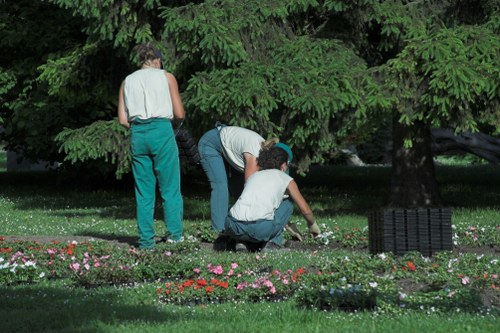
Overgrown hedges can block light, reduce access and make boundaries look untidy, so hedge trimming is often one of the most visible improvements in a garden. Trimming can be light and regular, or more corrective where the hedge has grown unevenly and needs rebalancing. The right finish depends on species, season, height and the look you want to keep along the edge of the property.
Careful cutting matters because hedges do more than create a screen. They also shape the proportions of the garden, frame walkways and influence how much space feels open or enclosed. A neat line can make a narrow area feel less crowded, while well-managed boundary growth can help a larger plot feel ordered. We take a measured approach to shaping so that the hedge still looks natural rather than clipped into an awkward form.
As part of a broader service, trimming is often paired with tidy-up work around the base, removal of cuttings and attention to adjoining beds or fences. If you are planning further outdoor improvements later, keeping the hedge in order first can make it easier to judge what the rest of the garden needs. It is also sensible when visibility, access or general presentation is a priority.
Clearance and removal work
When a garden has become crowded with cuttings, collapsed growth or unwanted material, a clearance service gives the space a reset. Our garden clearance work is useful after long periods without maintenance, before landscaping, or when you simply need the area made workable again. It can involve clearing green waste, lifting loose debris and removing overgrown material that is preventing normal use of the garden.
Clearance is not the same as routine tidy-up work. It is more suitable where there is a heavier build-up and the site needs a more decisive start. In practical terms, that might mean opening up access, stripping back dense growth or removing accumulated waste so that the remaining features can be assessed properly. If you later want new planting, a lawn repair or structural garden work, clearance often comes first because it reveals the true shape of the space.
Useful information to include when requesting a quotation:
- the approximate size of the garden or site
- the main type of material to be removed
- whether access is straightforward or restricted
- if any parts of the garden should be kept in place
Tree lopping and removal

Tree work needs a careful, controlled approach because the size and position of a tree affect both the method and the outcome. Our tree lopping and removal service is aimed at trees or large woody growth that are obstructing light, overhanging a garden, interfering with other features or no longer suitable for the available space. The right treatment depends on condition, height, spread and access around the tree.
Some jobs call for reducing growth rather than removing the tree completely, while others require full removal because the tree is no longer practical to retain. A sensible approach takes account of nearby planting, buildings, fences and paths, and it also considers what should remain undisturbed nearby. We keep the work focused on the agreed outcome, whether that means opening space, easing pressure on the rest of the garden or dealing with material that has become difficult to manage.
Tree-related work often sits alongside hedge trimming or clearance when a garden has several layers of overgrowth. In that case, the order of operations matters: removing the larger obstruction first can make the rest of the garden easier to assess and maintain. If you are unsure whether the issue is a tree, a large shrub or a mixed growth area, it is usually better to describe the problem plainly than to over-specify it.
Decking and landscape improvements
Some gardens need more than routine upkeep. For spaces that would benefit from a defined seating area, better circulation or a more structured layout, decking services can create a practical surface that sits comfortably alongside planting and lawn areas. Decking is often used to improve usability where ground levels, access routes or the existing layout make a simple lawn less effective on its own.
For wider changes, landscape gardening and landscaping allow the garden to be reorganised more deliberately. These services can support a new layout, refreshed planting zones, better transitions between areas and a more coherent finish overall. The exact work varies from project to project, so it is important to define whether the goal is a modest upgrade or a fuller transformation of the space.
Choosing the right level of improvement
Before deciding on a new feature or layout, it helps to look at how the garden is actually used. A seating space may need better ground preparation, while a planting-led design may depend on clearing old growth and reshaping borders first. Where several improvements are planned together, the sequence can affect both the finish and the amount of disruption. A good quotation should reflect the work required, not just the visible surface change.
Pricing, scope and quotation details

Garden work is usually priced around the amount of labour involved, the scale of the site and the complexity of the task. A simple mow or trim is very different from a clearance with heavy growth, and both are different again from a landscaping project with several phases. The main factors are access, condition, volume of material, time on site and whether disposal is included in the agreed scope. Clear information helps the quotation reflect the real job rather than a rough guess.
To keep the process efficient, it helps to describe the present state of the garden and the result you want. If there are areas to avoid, features to protect or sections that need attention before anything else, mention those as well. Photographs can be useful, but a written outline still matters because it explains what needs doing and what should stay untouched. Specific instructions make the quotation more accurate and help avoid unnecessary assumptions.
If you are comparing services, think first about the outcome you need, then about the order in which the work should happen. A garden that needs clearing before mowing will require a different plan from one that only needs regular upkeep. The most reliable quotation is the one that matches the real sequence of work, so it is worth being precise about the condition of the site and the priorities for the visit.
About Lewisham
Lewisham is a district in south-east London with a long and layered history shaped by settlement, transport and urban change. The area takes its name from an older village recorded in medieval sources, and over time it developed from a riverside and rural fringe into a densely built urban centre. Its position in the London Borough of Lewisham places it within a wider patchwork of neighbourhoods, from busy town-centre streets to quieter residential avenues and pockets of open space. The district is closely associated with the River Ravensbourne, which runs through parts of the borough and has influenced both the historic landscape and the later pattern of development. Transport has been central to Lewisham’s character, with rail and road links supporting its growth and making it an important south-east London hub. Much of the built environment reflects that long evolution: Victorian and Edwardian housing sits alongside later redevelopment, high streets, civic buildings and modern apartment schemes. Local parks and open spaces add to the area’s character, including the large green expanse of Hilly Fields in nearby Brockley and the wider network of parks across the borough. Lewisham also has a strong everyday identity shaped by markets, schools, community venues and cultural activity, with the town centre acting as a focal point for shopping and services. Its streets are varied rather than uniform, and that mix of housing styles, commercial areas and green corridors gives the district a practical, lived-in quality that remains central to its appeal.
Planning the work in the right order
Many outdoor projects work best when the tasks are sequenced sensibly. A hedge that blocks access may need attention before mowing, while a garden that has been left untended might need clearance before any finer maintenance can begin. For larger improvement jobs, the order may include stripping back the old layout, dealing with unwanted growth, then moving on to decking, landscaping or planting work. That keeps the job efficient and helps each stage build on a cleaner base.
We can combine related tasks where that is the most practical approach. For example, hedge trimming may be paired with mowing and basic tidy-up work, while a clearance may form the first part of a wider landscape gardening plan. This is often easier for the customer as well, because it reduces the need to coordinate several separate visits when the site is ready for one organised programme of work. Where the brief is more limited, we keep the work focused on the single service requested.
For a straightforward start, choose the service that reflects the main problem and use the quotation process to add detail. If the garden needs several types of attention, describe the priorities in the order you would like them handled. That gives a better basis for discussion and helps make the result more predictable.
Arrange a quotation

Whether you need maintenance, clearance, trimming or a broader garden improvement, the next step is to outline the work and request a quotation. A good brief does not need to be elaborate; it just needs to say what the garden looks like now, what needs to change and whether anything should be protected or left in place. From there, the service can be shaped around the actual task rather than a generic description.
If you are preparing several possibilities, it is usually best to begin with the main requirement and add the supporting tasks afterwards. That might mean starting with mowing and then including hedge trimming, or beginning with clearance before discussing decking or landscaping. A simple summary is enough to open the conversation. Ask for a quotation when you are ready, and choose the service that best matches the current condition of the garden.
For a direct next step, use the quotation page to send your details: request a quotation. If you would rather look at the overall range first, you can also review the services overview and then decide which page fits your needs best. Once you have the right starting point, the rest of the planning becomes much simpler.